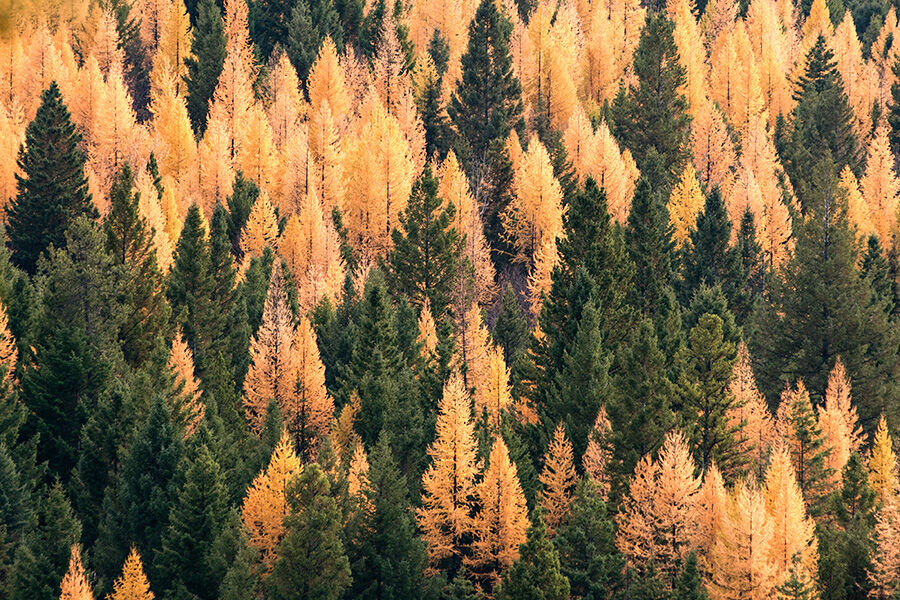
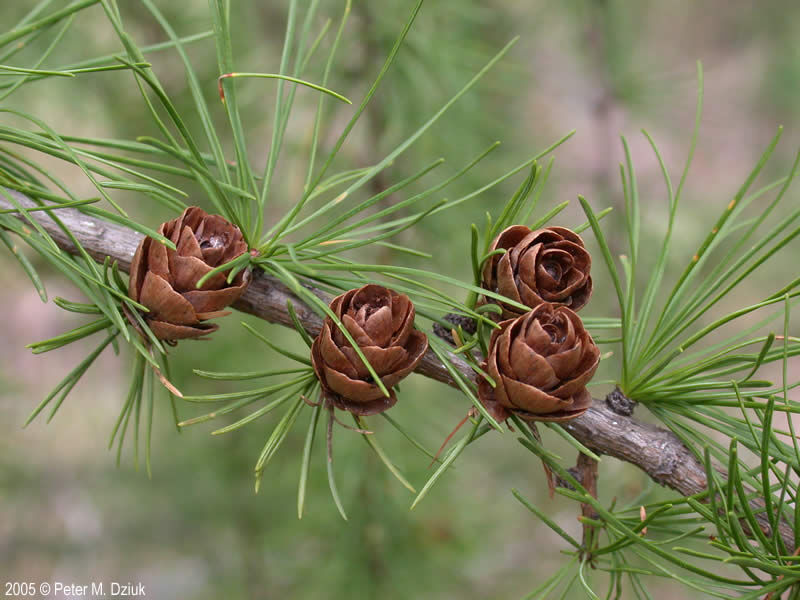
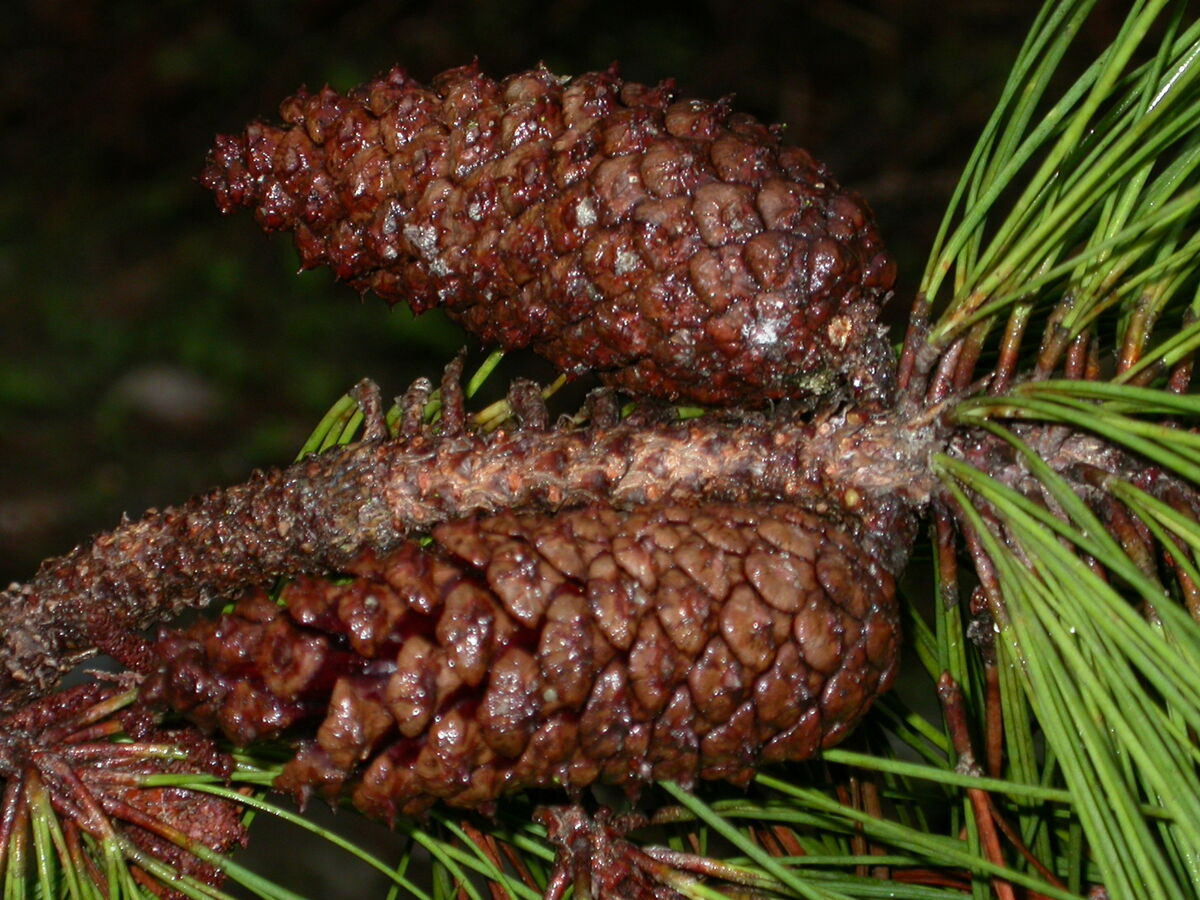
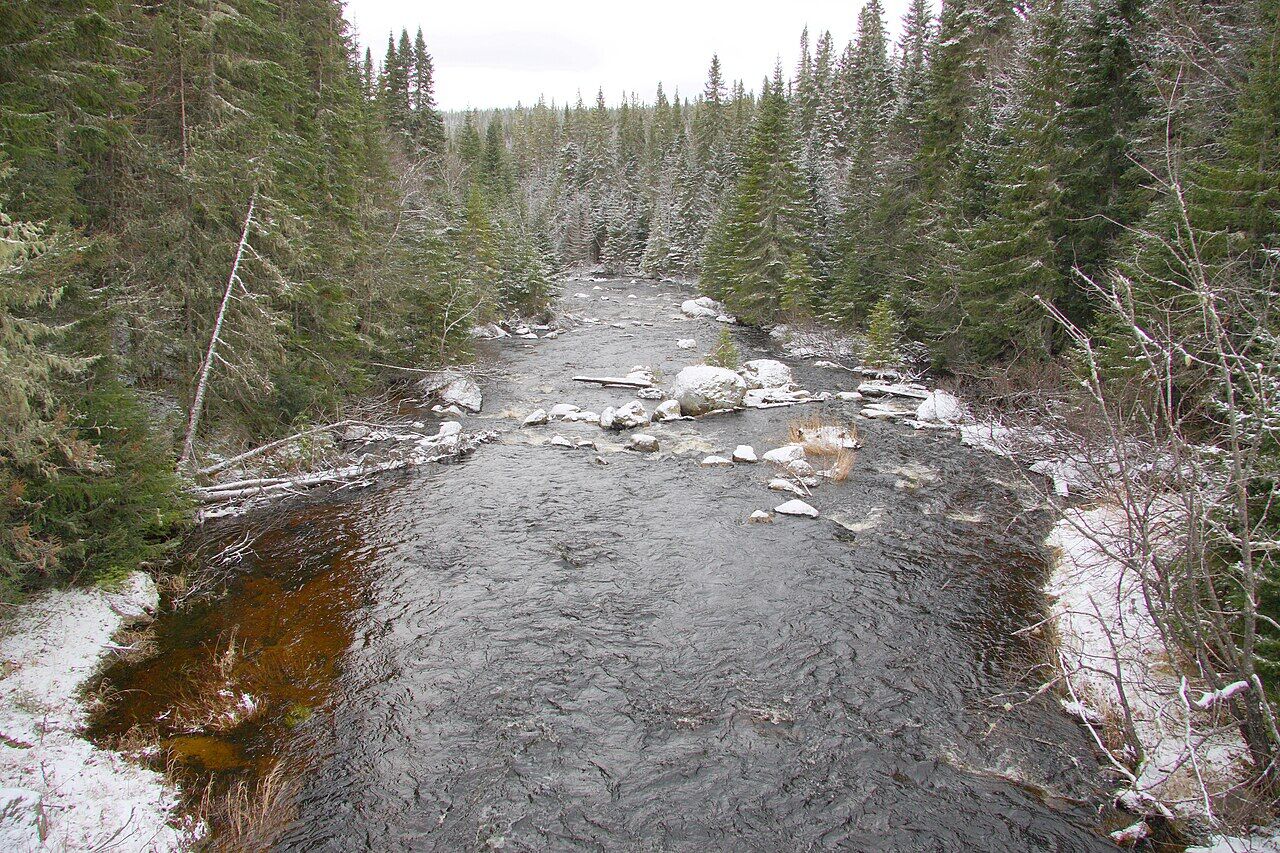
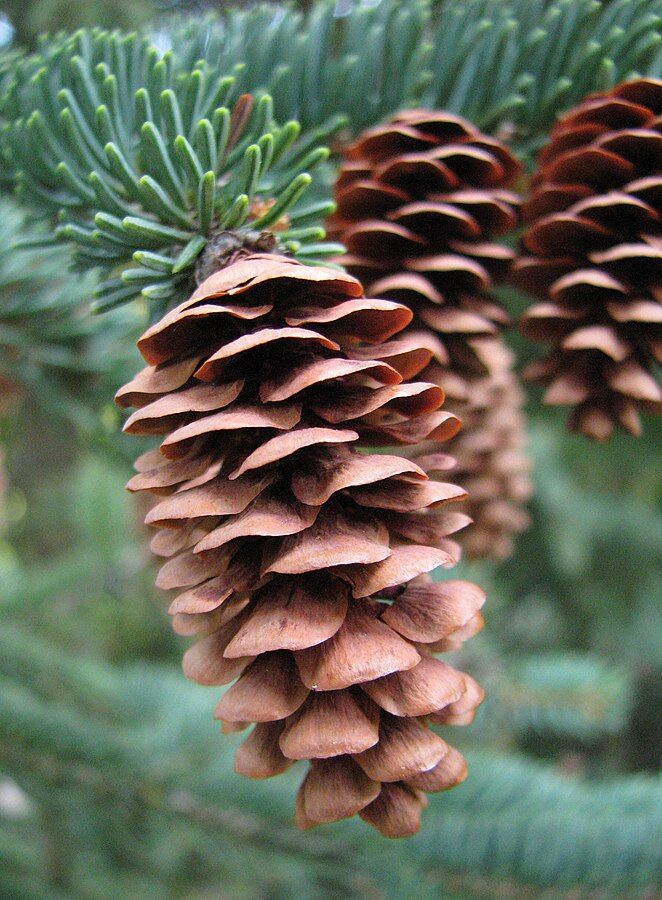
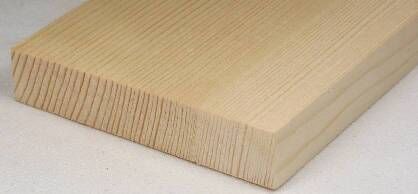
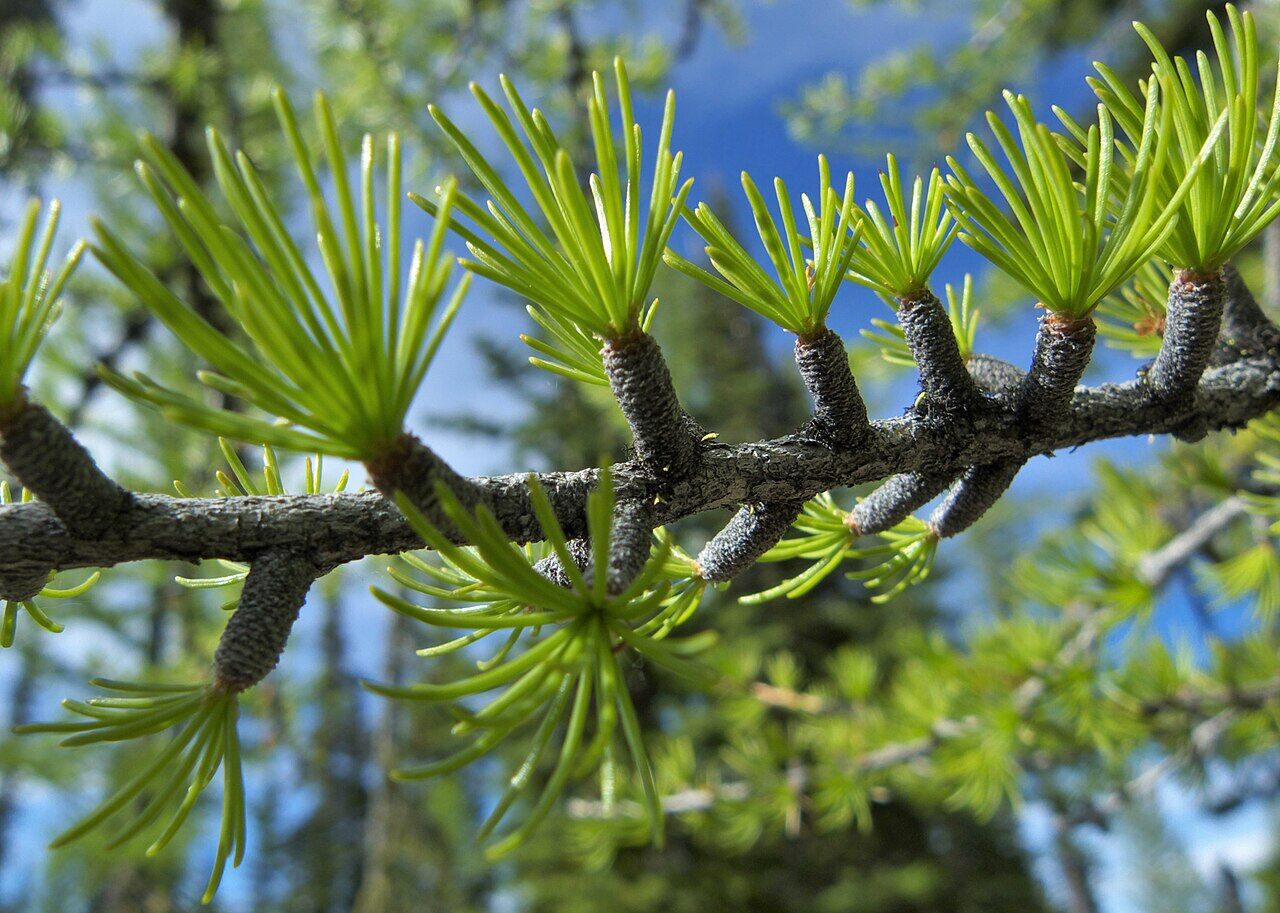
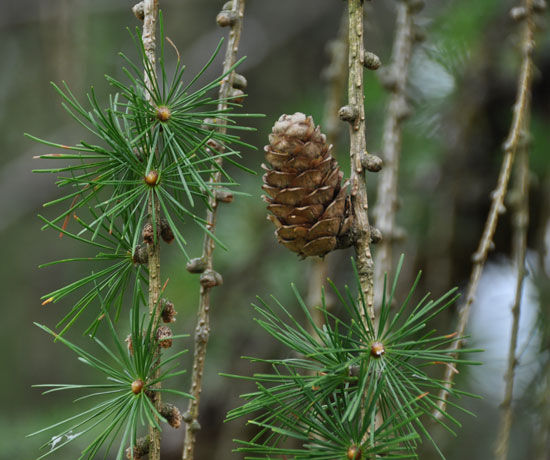
The TreeTamarack or Eastern Larch is one of the four softwoods species (Larches and Baldcypress) that shed their needles each fall. It is a straight slender tree 40 to 70 feet tall and 12 to 20 inches in diameter. It generally grows in swampy locations. The limbs begin almost at ground level, are almost horizontal, thin and curve upward slightly. The needles are feathery in appearance, a bright green in color, only about an inch long and grow in clusters along the small branches. These needles turn a yellowish or rust color in the autumn and fall off. The name “Ka-neh-tens,” meaning “the leaves fall” was given this tree by the Iroquois Indians. The small cones are a bright chestnut brown and form in clusters close to the small branchlets. At first the cone scales are opened slightly in the spring; after pollination they close into a compact ball until the seed ripens. The bark of the mature trees is a dark reddish brown, with shallow furrows and thin scales. The tree is especially susceptible to attack by the larch saw-fly.Eastern Larch Pine ConescdEastern Larch Tree BarkCommon Names in UseTamarack (Me., N.H., Vt., Mass., R.I., N.J., N,Y,. Pa,. Ind,. Ill., Wis., Mich., Minn., Ohio, Ontario)American Larch (Vt., Wis., nurserymen)Black Larch (Minn.)Epinette Rouge (Quebec)Hacmack (lit)Hackmatack (Me., N.H., Mass,. R.I., Del., Ill., Minn., Ontario )Juniper (Me., New Brunswick to Hudson Bay)Ka-neh-tens-- "The leaves fall" (Indians, N.Y.)Larch (Vt., Mass., R.I., Conn., N.Y., N.J., Pa., Del., Wis., Minn., Ohio, Ontario)Red Larch (Misch.)Growth RangeThe Tamarack ranges from Newfoundland and Labrador, west to Mackenzie and Alaska, south to Pennsylvania, Maryland, Illinois, Minnesota, and Alberta. It is strictly an eastern and northern species and should not be confused with Western Larch, sometimes called Western Tamarack.Eastern Larch Range MapThe WoodThe wood is coarse in texture, the heartwood being a yellowish to russet brown but without a pronounced reddish tinge. The sapwood is narrow and a creamy white color. It resembles hard pine and is moderately heavy, stiff, brittle, hard and strong, slivery, generally straight-grained but occasionally spiral-grained. Close fibers make Tamarack wood difficult to penetrate with preservatives. It works well with tools and has an oily or greasy feel in handling.UsesTamarack lumber is used for rough, general construction, railroad ties and ship timbers. Having a straight stem, Tamarack is used extensively for telegraph and telephone poles. It is now used also for paper pulp. The large roots and the lower portion of the stump are sometimes used to hew "ship knees” used in keels of wooden ships.BibliographyShelley E. Schoonover (American Woods) 1951 (Watling & Co. ) Santa Monica, CA File AttributionsThe TreeDziuk, P. M. (2012). Mature Tamarack trees in fall color [Photograph]. Minnesota Wildflowers. https://www.minnesotawildflowers.info/tree/tamarackEastern Larch Tree BarkDziuk, P. M. (2014). Tamarack tree bark [Photograph]. Minnesota Wildflowers. https://www.minnesotawildflowers.info/tree/tamarackEastern Larch Pine ConesDziuk, P. M. (2005). Tamarack tree cones [Photograph]. Minnesota Wildflowers. https://www.minnesotawildflowers.info/tree/tamarackEastern Larch Range MapBy Elbert L. Little, Jr., of the U.S. Department of Agriculture, Forest Service - USGS Geosciences and Environmental Change Science Center: Digital Representations of Tree Species Range Maps from: Elbert L. Little, Jr. (1971), Atlas of United States trees, Vol. 1, conifers and important hardwoods: U.S. Department of Agriculture Miscellaneous Publication 1146, 9 p., 200 maps., Public Domain, https://commons.wikimedia.org/w/index.php?curid=30488913



.thumb.jpg.573d1497d0675219908c85aabefd797a.jpg)














.jpg.c9994464084e6fe78cde40de17e7f729.jpg)
.jpg.92e714af9d614bda38a84427f5f651bb.jpg)


.jpg.2b56474f9b43be805c5b3c83b14228f9.jpg)