
Search the Community
Showing results for tags 'wax'.
Found 13 results
-
I discovered this company by chance while looking at some WW stuff on FB https://store.bwccompany.com They show a broad variety of wax products as well as other wax related wood finishes. Anyone have any experience or product reviews? Their bowling alley wax looks promising for metals https://store.bwccompany.com/4122620.html From their web page The BWC Company is the leading Manufacturer of hard to find finishing products including the original Bowling Alley, Boston Polish and New England Paste Wax products. We have also developed Preen Style Wax as a substitute for the no longer manufactured Wood Preen Liquid Wax. calabrese55
-
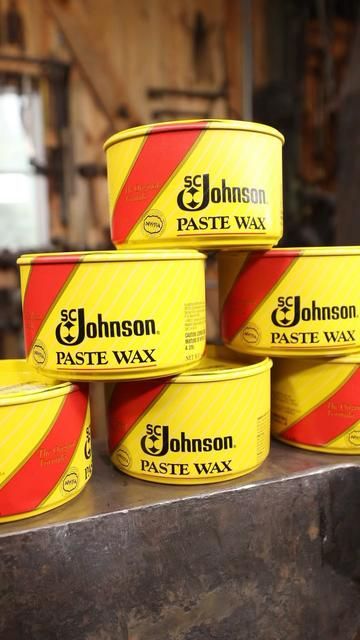
I heard awhile back that this staple of America was going to be discontinued as early as last year, but I also read articles that it was an urban myth, and the discontinuation only effects some retailers, but still can be found virtually anywhere in the US. Anyone have any insight on this? Granted, even if it were discontinued, there are many alternatives out there, for specific uses and purposes, but it would be sad if this legendary wax was discontinued, what would our young soldiers, sailor's and airmen use for buffing the barracks floors during those long CQ hours! EDIT: This topic borrowed from a Facebook group, Unplugged Woodworker's.

-
Hello! I bought a number of old wooden dough bowls when we were stationed in Europe, and they are in need of some TLC. I know the person I bought most of them from treated them with wax. Does anyone have a favorite wax? Do you just apply and buff with an old rag or use an electric polisher?
- 14 replies
-
- 3
-

-
- dough bowl
- bowl
- (and 2 more)
-
Hello all, I bought some wood on Etsy; it arrives coated in a very heavy coat of wax. OK, that's good, however, I see black under the wax that is not common on the wood. Turns out it is mold, and the wood is so wet that it is throwing water on me as I turn it. The wax would all have to be removed and a great deal of time would be required to allow the wood to dry properly. I bought several pieces like this and returning it may not be an option due to it was free to ship to me, but to return it with the weight it would be expensive for me to do so. I am looking for comments, suggestions on if I should complain or not (will it do any good?). I already know what I have to do, (suck it up buttercup, cut off the top wax layer and let it dry) but was wondering if anyone has seen this and what you did in the circumstances. Thanks, Nevin
-

Wednesday's Wisdom For Woodturners (On A Thursday) October 13, 2022
lew posted a topic in Wood Turners
Well, a day late. Yesterday got away from me and by the end of the day I was beat. Added stair rails to the deck steps. Mimi has been having difficulty navigating the steps while trying to keep control of the new puppy. First one wasn't as perfect as I would have liked- angles slightly off. Second one went a little better. Apparently my Sketchup drawing was not accurate for the stairs that were already in place. Our Patriot Turners- @Steve Krumanaker gave us an update on the platter he is making. The weave design is coming along nicely- See Steve's post for our turner's comments and more images of the platter- @Ron Altier posted one of his earlier turned ornaments- In his post, Ron explains a little on how this one was made- @RustyFNhas been really busy in his shop turning bowls, plates and refinishing. He posted two of the bowls he made This post has both along with comments from our turners- The plate, Rusty turned, got lots of comments on how perfectly it was centered- Rusty told us this one almost didn't happen! Rusty also decided to refinish a bowl he had turned Part of his finishing process included the use of wax. He explained what he did and what happen. He received lots of advice on finishing in this post- @Bob Hodge showed us some of his Christmas ornaments and shared his thoughts on spindle turning versus bowl turning. His ornaments combine several different materials and ideas- See his post for all of the details- What’s Coming Up- Lyle Jamieson has a couple of IRD's coming up- https://lylejamieson.com/product-category/live-interactive-remote-demonstrations/ Accelevents Small Turning Expo- The link for more information- https://www.accelevents.com/e/mpg-small-turning-expo For The Newbies- From the Woodworker's Journal, the monthly email for woodturners. Check out the t really neat spindle projects included in the publication. The link- https://www.woodworkersjournal.com/woodturning-monthly/?utm_medium=email Expand Your Horizons- Have you tried wet sanding using an abrasive paste? In this video, of an IRD, Mike Peace demonstrates the processes- Watch Richard Raffan turn a sweet little bowl. What we start with and what it turns out to be is can often be quite different- New Turning Items- From Craft Supplies USA, the new digital catalog- https://www.woodturnerscatalog.com/emailsales/oct-6-22.html Not so much new but a few sales currently running- From Carl Jacobson, some Niles bottle stoppers https://nilesbottlestoppers.com/product/whiskey-sample-kit/ If you are looking to upgrade your sharpening system, Woodturners Wonders is having a "Build Your Own" Kodiak sharpening system https://woodturnerswonders.com/collections/kodiak-sharpening-system Everything Else- Rick Turns list of YouTube woodturning videos from last week- Safe turning-
- 9 replies
-
- 5
-
-
- woodturners wonders
- niles stoppers
- (and 23 more)
-
I had a bowl that I tried to put a poly finish over wax and it came out very bad. I sanded it back down and am redoing the finish without the wax.
-
Our club had a great meeting this weekend with Jeff Hornung of The Walnut Log doing the demo. He did a Morroco bowl using a Sorby spiraling tool and then Chestnut stains dye and finally liming wax. Some Ideas I had thought about but the Sorby was not in formula til now. It is the blue bowl in center. He had a really cool light . It has magnetic rechargable heads and base is magnetic. It seems to be very versatile and I just ordered one. https://www.thewalnutlog.com/woodworking-store/#!/GloForce-Eye-Light-With-Magnetic-Base/p/162397077/category=41610157
-
Containers and shavings slows the drying process but can take up extra space in the shop, especially if you have a bunch of blanks in different stages of drying. Another method of slowing the drying is to put a sealer directly on the surface of the blanks. This can work for the rough CUT blanks and the rough TURNED blanks. The sealer slows the transfer of the moisture from the wood to the air. The majority of the moisture is lost through the end grain pores. Sealing those areas is really important to reduce checking and splitting. For freshly cut logs (blanks) checking can occur within hours. Sealing immediately can reduce wasted material. If you have purchased precut turning blanks (pen, bottle stoppers, bowls) you probably noticed the blank had wax covering at least part of the material. Dipping the end grain (or entire piece) in molten wax seals the pores and slows the drying. This method does require a way to melt wax in a large enough container to dip/submerge the blank. Using a sealer that is already viscus, reduces the prep time and equipment needed. There are several commercially available products for sealing by painting the liquid onto the blanks. One that has been around for a long time is Anchor Seal- a wax based emulsion. It is available from many places and is the choice of a lot of turners. A similar product is available from Craft Supplies USA. Theirs is called "Tree Saver" and it’s a special blend of poly vinyl acetate. Turners are typically "thrifty" individuals. Many have turned to using already available materials for sealers. One very popular substance is latex paint. A heavy coating (or two) can seal the end pores. In addition to sealing, using different colors can pretty up your wood stash! My favorite sealer is good old TiteBond II wood glue. Did you notice the Tree Saver product is a "PVA" based material. Well, TiteBond is a PVA glue. I paint the glue on the ends of logs to keep them from splitting/checking. I honestly haven't used it on rough turnings, yet. A little different method, but having similar effect, is to cover rough turned blanks with stretch wrap shipping material. https://www.aawforum.org/community/threads/plastic-wrap-for-preventing-bowl-blanks-from-cracking.11885/post-111507 These methods have all been about slowing down the loss of moisture. But, as we know, woodturners are an impatient lot. What about speeding up the loss of moisture? Stay tuned.
-
- 1
-

-
- sealer
- anchorseal
- (and 4 more)
-
First let me say I’m sorry I haven’t been around lately. Sold my house at the worst possible time, trying to find another one is extremely challenging and stressful. Not to mention my sister has been diagnosed with Altzhiemers...you guys and this forum have been so good to me that I felt you should know...anyhow, I’ve seen a lot of turning videos and it seems everyone is using Acks products for a finish. Does anyone here use it? If so, does it hold a lasting shine? Just curious. I use EEE sanding paste and Aussie Oil as a finish. The Aussie oil seems to hold a much longer shine than wax does. Again, just curious....
-
There is not a lot of things to say about wax finishes, so only three things, not three pros and three cons. I am not talking about waxed finishes, but simply using a wax as the one and only finish. Some waxes are light amber, but you can get waxes in a variety of darker colors where the color has been added. Wax is an evaporative finish, meaning with the thinner or solvent evaporates, you are left with the finish. No more chemistry happens. Usually the solvent is mineral spirits, but sometimes, as in the original Briwax, it's something else, in that case tolulol (aka toluene). (So the original Briwax can be a bit too aggressive for new finishes as it's meant more of a restorative wax over a finish, that is, a waxed finish). Waxes are one or more of three types: - Animal (e.g., beeswax) - Vegetable (e.g., carnauba) - Mineral (e.g., paraffin) Three things: + easy to apply - to quote a movie, wax-on, wax-off. Let most of the solvent dry, then buff out. I like to say you want a finish just a few molecules thick, so take off as much as you possibly can, then buff a little more. Wax build-up can attract dirt and not be very attractive. + easy to repair - Just add some more - wax on; wax off - minimal protection - while wax can beautify a wood, it does not do much to protect it from moisture, soiling, etc. It would be appropriate for things that don't get much contact such as art turning, picture frames, etc.
-
A fellow cut down a chestnut tree, not knowing it was being watched and cared for by the University of Georgia. I was given some of the wood. By the time I got it, some of it had already developed cracks, so I wanted to seal it. I looked around and found a package of food canning wax, got out my blower heater, and melted it onto the ends. Took about 30 seconds, didn't need to melt a bunch of wax and dip the ends in it, and it seemed to do a good job. I had been putting a pan on a heater, melting it, and dipping it. Thought someone else might like the idea.
- 3 replies
-
- 5
-
-
-
- green wood
- checking
- (and 4 more)
-
What kind of wax do you use? I used to use Johnsons paste wax and several years ago Bonnie Klein a local wood turner was giving a demonstration for our WW Club and mentioned she liked the Lundmark carnuba paste wax. She said she uses it because it gives a hard finish and easy to apply and buff out and prevents finger prints on her work when people handle it. So I bought some and have been using it since with good results. https://www.amazon.com/Lundmark-Wax-LUN-3206P001-6-Applicable-Paste/dp/B000BYAQC2?SubscriptionId=AKIAIKBZ7IH7LXTW3ARA&&linkCode=xm2&camp=2025&creative=165953&creativeASIN=B000BYAQC2&tag=wwwbookcompar-20&ascsubtag=5a7e56cceba0c90d98bc9bd8 Herb
-
The Product Before beginning, it’s important to distinguish between a wax finish and a waxed finish. A wax finish is using wax as the only finishing product. A waxed finish is using a wax as a polish over another finish such as the ones we’ve already covered. Waxes are of different types Animal – beeswax Vegetable – for example, carnauba Mineral – paraffin (a petroleum product) Synthetic A wax product may (and often is) a combination of different kinds of waxes. To make it workable, it can be dissolved (softened) in a solvent to make it into a stick (solid), paste, or liquid. Most often the solvent is mineral spirits or naphtha. In some products (Briwax is one), the solvent is toluene that is a stronger solvent and may damage some finishes, but serves as a restorative wax when used as a polish. Years ago, wax was used because it was about the only finish available (and cheap) to a common craftsperson. Characteristics Wax, when used as a finish, is as closer than any finish to being no finish at all. Some waxes are tinted and can adjust the color of the wood. The main reasons to apply any finish are: · To beautify the wood · To protect it from damage and soiling · To provide a cleanable surface Wax mostly fails on the last two. I think waxes have limited use as a finish and the best application is something that is not handled or used as a work surface, for example, turned objects that sit on a shelf, picture frames, carvings, artwork, etc. You would not want to put this on an everyday dining table where a spilled glass of red wine or splash of spaghetti sauce will stain the underlying wood. Don’t confuse water beading up with water not penetrating. Waxes melt about 140-150 degrees (depending on type) Wax does not "feed and nourish the wood," it's dead. Pros: · Fast drying · Easily restored with minimal equipment and odor · Changes the color of wood very little (when a clear wax is used) Cons · Not very protective · Minimal resistance to heat, solvents, abrasion, soiling · Minimal resistance to liquid water and water vapor (unless put on very thick) Application Wax on / wax off. You can spray, brush, or rag on the liquid forms and rag on the paste forms. Let the solvent flash off a bit, then buff. If you are using a rag, you can add a chunk of paste wax to a cloth, wrap it in, and squeeze the wax through the fabric to apply. The best wax finish (and waxed finish) is just a few molecules thick. Left on too thick, it can look sloppy, smudge and smear, and attract dirt. You can repeat waxing and buffing as needed over time. If you are applying wax to a turned object, you can use the solid wax applied to the piece while it’s turning on the lathe. The friction melts the wax and gets it on the piece. Buff off the same way. Lubricant Wax is also useful either on raw wood or finished wood as a lubricant such as on drawer sides and runners. It does not need to be buffed off here. I rub on a stick of paraffin (sold as canning wax in the grocery store) and slide back and forth to burnish it in. Wax for cutting boards One good application for wax is as a finish for cutting boards. The normal recipe is to heat one part of wax to six or seven parts of mineral oil in a double boiler (not direct heat). Apply liberally to a cutting board surface, allow to cool and harden and scrape/wipe off the excess. Repeat as needed. Wax as a polish If you want to use wax as a polish, apply and buff off as much as you can, then a bit more. Left on too thick, it can smudge. You only need to do this every year or so, with just dusting in between. The wax will add a soft luster and provide some lubrication to reduce abrasion. In carved areas, you can use a toothbrush or shoe brush to buff out the wax. You can use a colored wax to highlight some of the details such as turnings or carvings. There is also another wax called “dusty wax” that is a waxed thinned to a liquid, then powdered pumice is added. Put on and wiped off, it adds a light gray/white accent to a piece--sort of an instant faux antique. One of my customers used to sell a lot of furniture with dusty wax on it. My wife always said it looked like “insufficient housecleaning.” To each his own, I suppose. Another use of wax is as a “finish the finish” Apply wax with 0000 steel wool after the last coat of finish is cured. Buff off to get a very smooth final finish. Wax will also help restore an old finish without needing to strip and refinish (1). Fixing Goofs Not much you can do wrong except apply to an inappropriate surface or leave too much on. You can remove (most of) the wax by wiping with rags moistened in mineral spirits of naphtha, using fresh rags and turning often. You probably won’t get it all, so do your best and seal with shellac if you want to top coat Once you use wax as a polish, avoid using other liquid polishes that might interact with it. Pick either wax or liquid polish and stick with it Further reading: (1) Using wax as a step in restoring/saving an old finish: http://homesteadfinishingproducts.com/cleaning-waxing-old-furniture/ http://homesteadfinishingproducts.com/cleaning-waxing-old-furniture/

.thumb.jpg.573d1497d0675219908c85aabefd797a.jpg)


.png.8d01fab120e5e24a8a4ebbaf0d83fb83.png)
.png.db6294b27cdddc310b2a670aed0d36fa.png)


