

Entry posted by lew
4,315 views
Having solved the problem of the non-supported dovetails in the lid, I made a dry fit of the sides and ends

Most often, I like to make actual measurements rather than rely on what I calculated the size of the pieces I'll need.

The good old Stanley Folder is my go-to tool for this type of measurement.
Once the dimensions are taken, I can size and create the top and bottom.

Both pieces were made from glue-ups. The top is 1/2" stock. The bottom is created from some thinner stock glued up to make the panel.; then planed to 1/2" thick.
The bottom and top set in dados. The bottom is rabbeted to make a 1/4" tongue for the dado.

The top is a raised panel made on the table saw. To make the top, the first thing is to create a crisp edge for the raised portion.
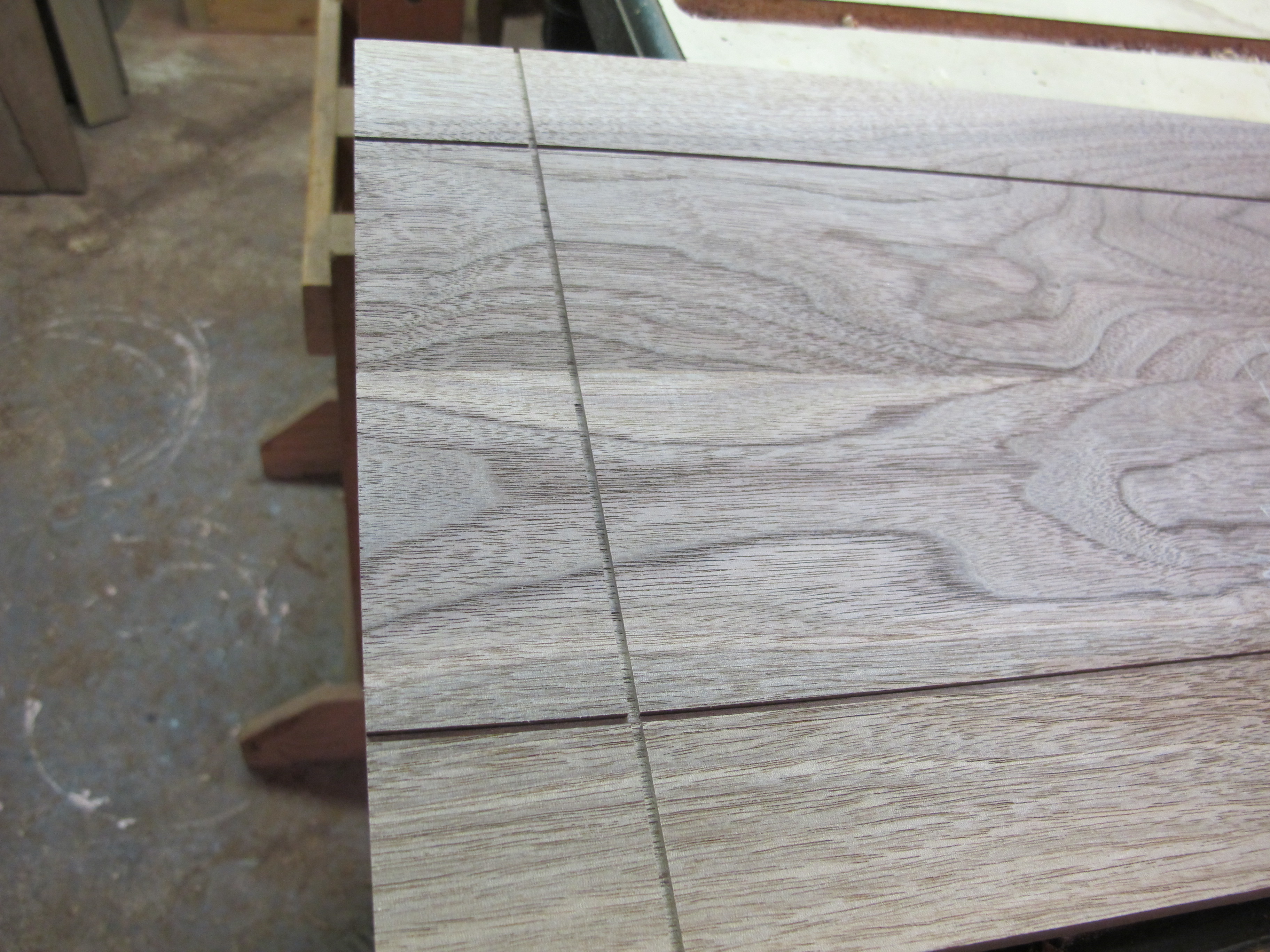
The cuts are about 1/16" deep and will form the lip of the raised portion. The distance from the edge of the panel to the cut is sort of a trial and error method. Layout on a test piece, cut, check. I make my raised panels with a 7° angle. It seems to work best for me.
To make the angled cuts, I use a shop made raised pane jig. It is sort of an overgrown tenoning jig.


The down side of this method is that it requires a fair amount of sanding on the bevel to get rid of the saw marks. The up side- I don't need to buy a giant router and a set of raised panel bits. Don't get me wrong- I'm not opposed to buying more tools. However, a bigger router means I'd have to rebuild my shop made router table lift.
Now it is just a matter of dry fitting the entire unit together-


Next time, the glue-up, fix for the dove tail mistake and splitting the box.


.JPG.24d654000fb250788f3b0f4cce50c2d3.JPG)


3 Comments
Recommended Comments
Join the conversation
You are posting as a guest. If you have an account, sign in now to post with your account.
Note: Your post will require moderator approval before it will be visible.