Skip to content
View in the app

A better way to browse. Learn more.

The Patriot Woodworker

A full-screen app on your home screen with push notifications, badges and more.

To install this app on iOS and iPadOS
  1. Tap the Share icon in Safari
  2. Scroll the menu and tap Add to Home Screen.
  3. Tap Add in the top-right corner.
To install this app on Android
  1. Tap the 3-dot menu (⋮) in the top-right corner of the browser.
  2. Tap Add to Home screen or Install app.
  3. Confirm by tapping Install.

Wood

This is the Wood category of our wiki
The Tree
The Jack Pine is generally considered an inferior species. However, it is gradually growing into commercial importance as stands of the higher grade pines are depleted. New uses during war years also have brought it into prominence.Normally Jack Pine is a tree 25 to 70 feet high with trunk diameters of 8 to 24 inches. It grows rapidly but is comparatively short-lived,and in its growth range establishes itself very well after forest fires or heavy lumbering operations. It is thickly branched, and on young trees the branches remain on the stem almost to the ground, causing the wood to be very knotty. The bark is thin, with narrow shallow ridges, a scaly rough surface and a dull dark red-brown color. The needles grow in pairs, only about one inch long, and are narrow, flat, stubby, twisted, and sharply pointed, dark gray-green in color. The branchlets curve in horn-like fashion. The cones which are oblong-conical, curved, with thick scales, stand erect and close to the twig, are from one and a half to two inches long and one-half
to three quarters inch in diameter when closed; these cones ripen the second season but open unevenly, remain closed for several years and may remain on the tree for many years. The tree is easily identified by the numerous small crooked branches beginning close to the tree base, and by its twin. short, stiff and sharp needles and small curved cones clinging to the tough branches.
Common Names in Use
Jack Pine(Mich., Minn., Wis., Ontario)
Gray Pine (Vt., Minn., Mich., trade)
Black Jack Pine (Wis.)
Hudson Bay Pine (trade)
Black Pine (Minn.)
“Juniper” (Canada)
Banksian Pine (lit.)
Northern Scrub Pine (lit.)
Canada Horncone
Pine (Calif., lit.)
Princess Pine (Ontario)
Check Pine
Cypress (Quebec and Hudson Bay)
Scrub Pine (Me., Vt., N.Y., Wis., Mich., Minn., Ontario)
Sir Joseph Banks Pine (Eng.)
Jack Pine Tree Bark

Jack Pine Cone

Growth Range
The growth range of Jack Pine extends from Nova Scotia and Quebec to Mackenzie, throughout northern New England, northeastern New York and to the Lake States of Minnesota, Wisconsin, Michigan, Illinois and Indiana.

The Wood
Jack Pine wood is brittle but comparatively weak, light in weight, soft in texture and close-grained. The heartwood is a light brown-tan with a thick whitish sapwood. Its workability is similar to other pines.
99. Pinus Banksiana (Lambert) by Romeyn B. Hough

Uses
It now has important commercial use as paper pulp. The numerous knots make it useful for “knotty pine" interior finishes. Increasing amounts of lumber are produced from Jack Pine. It resembles Red Pine, but is more knotty. This lumber is now used for boxes, crates, siding, rough construction and slack cooperage.
Bibliography
Shelley E. Schoonover (American Woods) 1951 (Watling & Co. ) Santa Monica, CA 
File Attributions

  • 136 views
John Morris
John Morris
The Tree
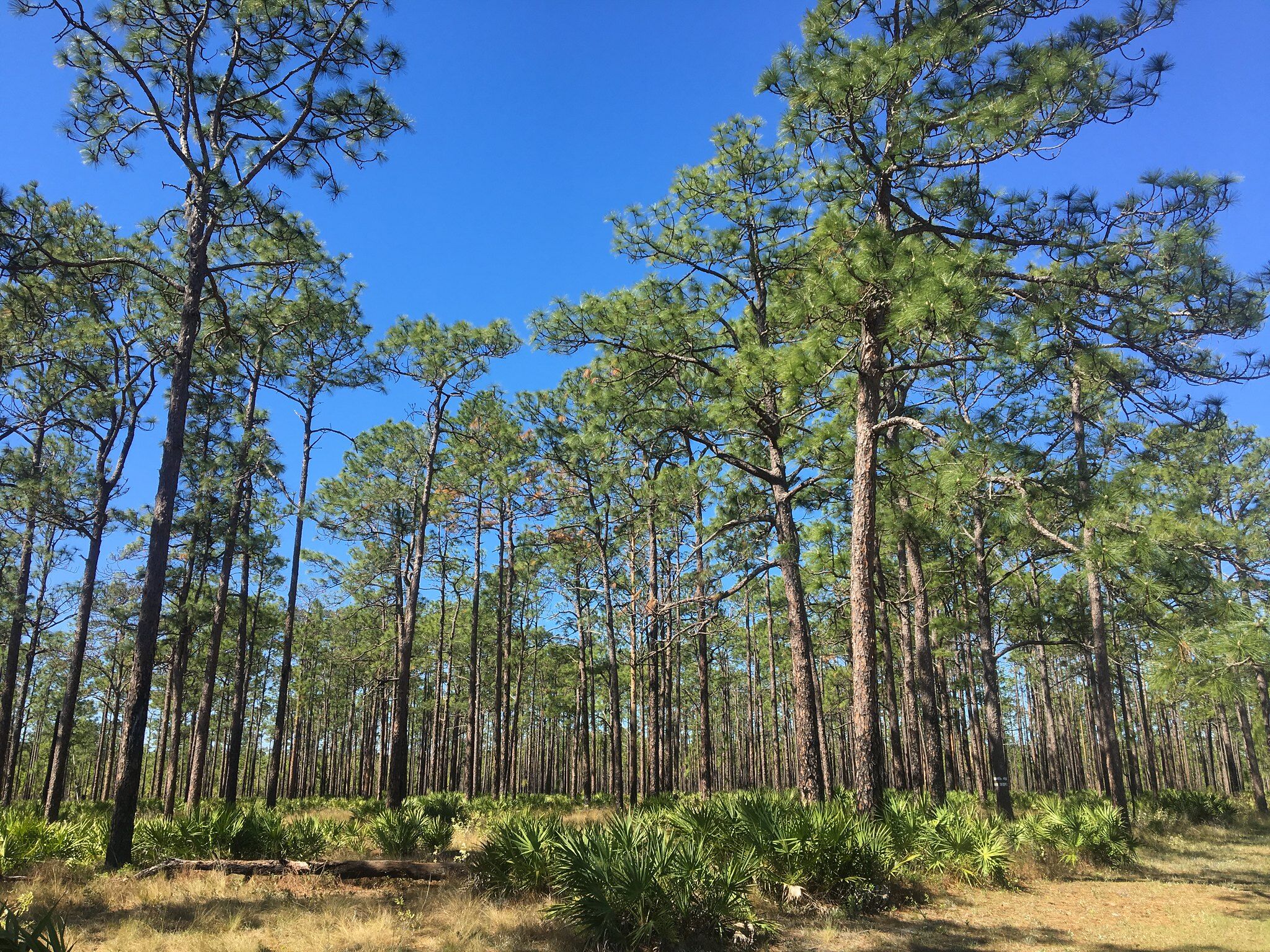
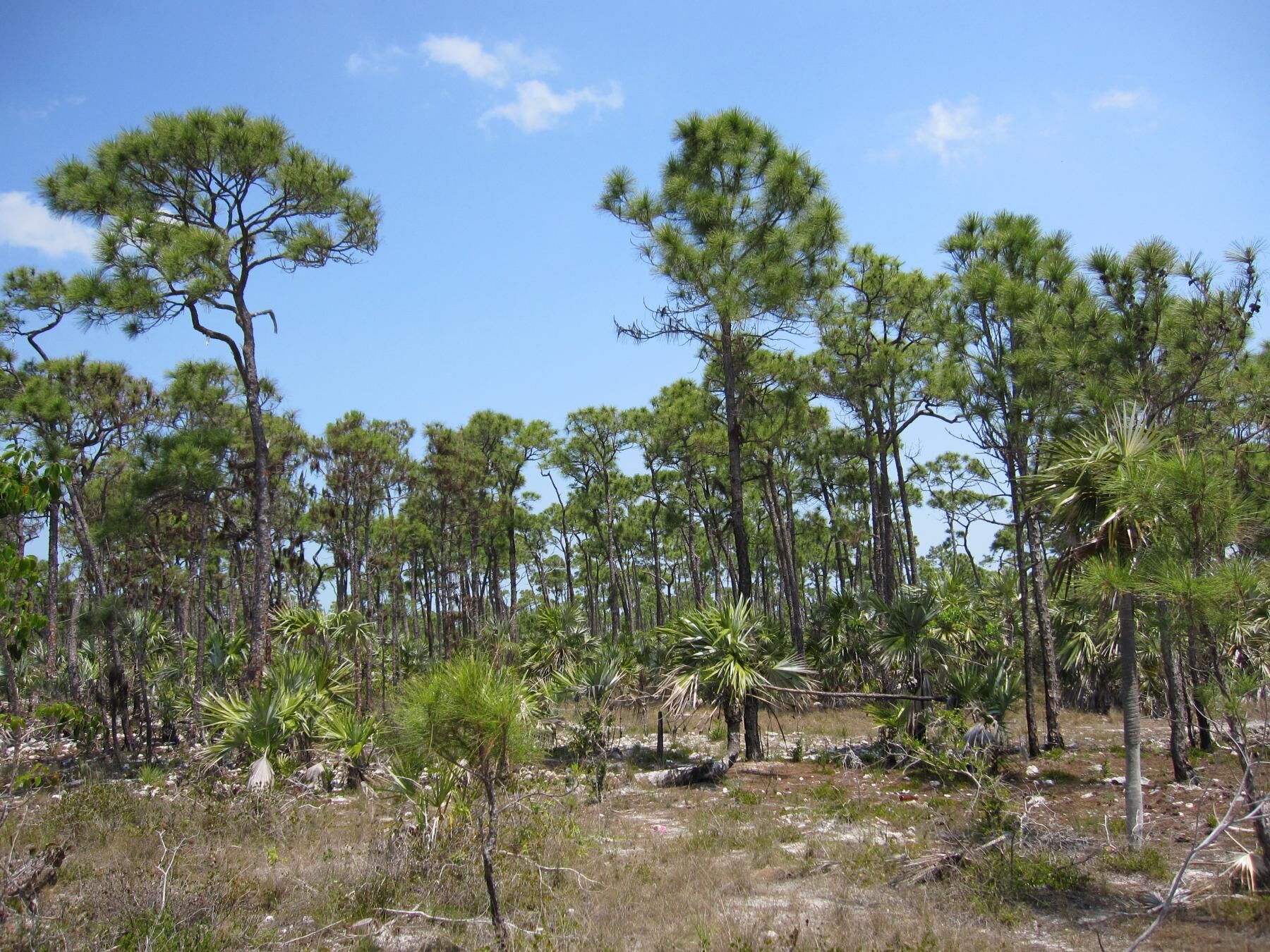
The Longleaf Pine is one of the outstanding pines of the southern forests and one of the four southern yellow pines. It is a straight tree 100 to 120 feet tall with a trunk 24 to 36 inches in diameter. Limbs are comparatively sparse and open. The trunk is high and clear for nearly two-thirds the height of the tree. The bark is lightly furrowed into broad scales and is of an orange-brown color. It is conspicuous by its shiny flexible needles, 8 to 18 inches long, dark green in color, with three in a cluster, which drop off in two years. The name Longleaf is given the tree because of its very long needles. The cinnamon colored cones are 5 to 10 inches long with thick scales, forming in clusters of several cones each. The tree is subject to attack by the Southern Pine beetle and other insects and fungus diseases. The “razorback” hog is very fond of the young tender roots.
Common Names in Use
Longleaf Pine (trade)
Broan Pine (Tenn.)
Broom Pine (lit.)
Fat Pine (South U.S.)
Florida Longleaf Yellow Pine (trade)
Florida Longleaved Pine (Atlantic region)
Florida Pine (Atlantic region)
Florida Yellow Pine (Atlantic reg.)
Georgia Heart Pine (general)
Georgia Longleaved Pine (Atlantic region)
Georgia Pine (general, Del. region)
Georgia Pitch Pine (Atlantic region)
Georgia Yellow Pine (Atlantic)
Hard Pine (Ala., Miss., La.)
Heart Pine(N.C. and So. Atlantic region)
Longleaf Pitch Pine (Atlantic reg.)
Longleaved Pine (Va., N.C., S.C., Ga., Ala., Fla., Miss., La., Tex.)
Longleaved Yellow Pine (trade and Atlantic region.)
Longstraw Pine (Atlantic region)
North Carolina Pitch Pine (Va., N.C.)
Pitch Pine (Atlantic region)
Rosemary Pine (N.C.)
Southern Hard Pine (general)
Southern Heart Pine (general)
Southern Pine (N.C., Ala., Miss., La., and trade)
Southern Pitch Pine (general)
Southern Yellow Pine (general and trade)
Texas Longlcaved Pine (Atlantic region)
Texas Yellow Pine (Atlantic region)
Turpentine Pine (N.C.)
Yellow Pine (Del., N.C., S.C., Ala., Fla., La., Tex., and trade)
Longleaf Pine Tree Bark

Longleaf Pine Cones, usually three in a bunch

Growth Range
The growth range of Longleaf Pine extends from the southeastern coastal plain of Virginia through North and South Carolinas, Georgia, Florida, Alabama, Mississippi, Louisiana and eastern Texas.
The Wood
Longleaf Pine wood is very resinous, hard, stiff, straight but uneven-grained, medium-textured, strong and durable. Care must be exercised in working with tools. The heartwood is a beautiful light reddish-tan to orange-brown while the sapwood is thin and nearly white. The growth rings are plainly visible. It nails hard but holds nails and screws satisfactorily. When properly seasoned the wood stays in place very well. It is one of the few pines having a pronounced figure. Quite frequently a beautiful blister figure is found in Longleaf Pine.
Uses
This is one of the important naval stores trees in the United States, from which is derived large quantities of turpentine and rosin. A “face” is made by chipping away the bark and collecting the resinous sap; also, the chips from subsequent faces are distilled for naval stores. It is also an important lumber tree for heavy general construction, railroad car construction, ties, piles, poles, ship building, flooring, interior finish, wainscoting, sash, frames, agricultural implements, cooperage, and cheap furniture. Some quantities of it are also used for paper pulp.
Bibliography
Shelley E. Schoonover (American Woods) 1951 (Watling & Co. ) Santa Monica, CA 

File Attributions

  • 279 views
John Morris
John Morris

Account

Navigation

Search

Search

Configure browser push notifications

Chrome (Android)
  1. Tap the lock icon next to the address bar.
  2. Tap Permissions → Notifications.
  3. Adjust your preference.
Chrome (Desktop)
  1. Click the padlock icon in the address bar.
  2. Select Site settings.
  3. Find Notifications and adjust your preference.