The Softwoods (Conifers)
The Softwoods (Conifers)
18 articles in this category
-
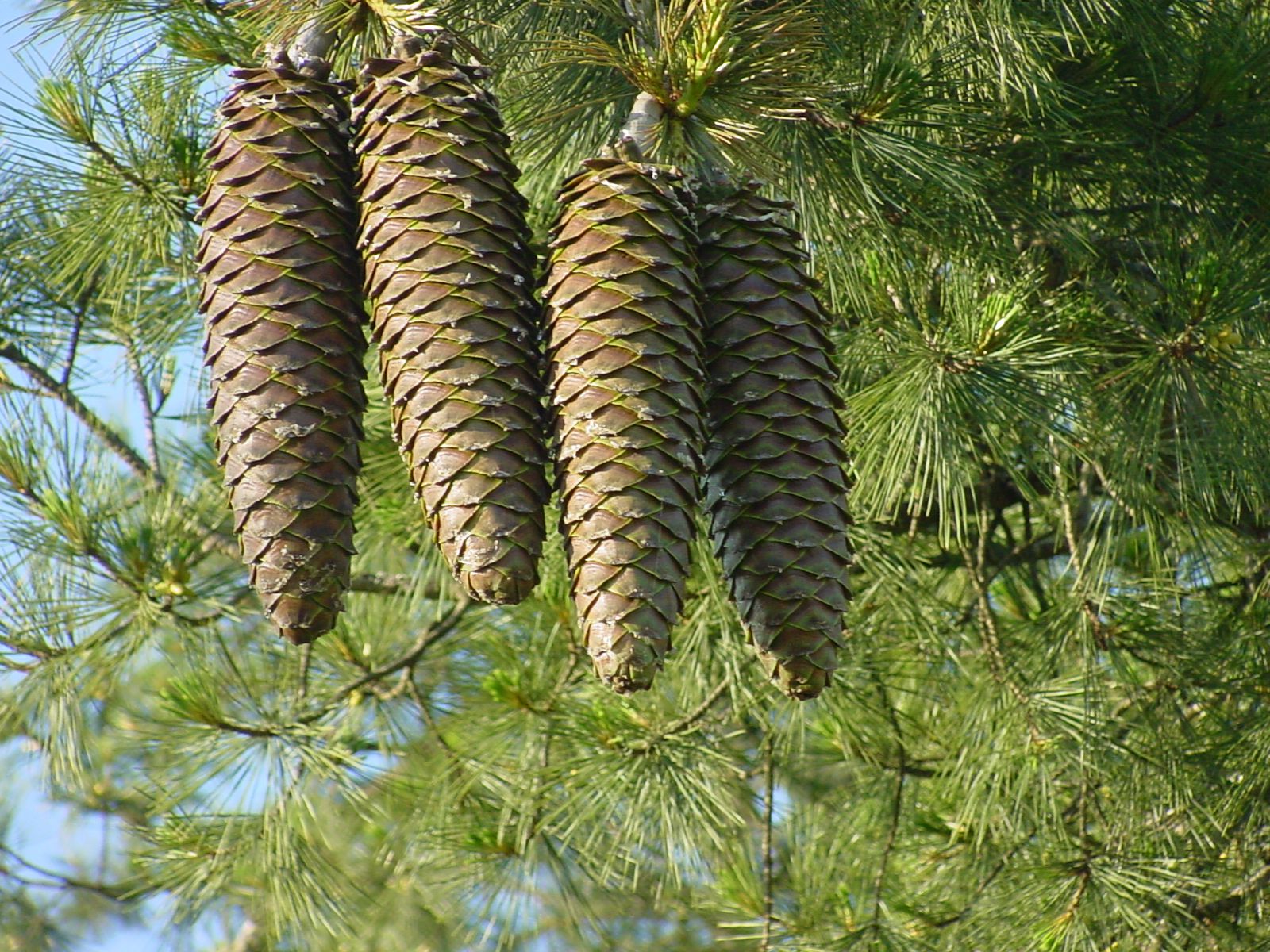
Trees are generally classed in two groups, namely, Softwoods or Conifers, and Hardwoods or Broadleafs. Those classed as softwoods usually have needle-like or scale-like leaves and on all but the junipers, some cedars, yews, and a few others, the “fruit” is a “cone” or ball of woody, overlapping closed scales, beneath each scale of which is enfolded one or more seeds. The “cone” of the junipers and yews is a small berry-like fruit within the pulp of which one or more seeds are enveloped. Because
.thumb.jpg.573d1497d0675219908c85aabefd797a.jpg) John Morris
John Morris- 603 views
-
The Tree The Eastern White Pine, the king of all trees east of the Mississippi, and upon which the lumber industry of the United States was founded, is a stately tree growing to a height of 100 to 150 feet and occasionally over 200 feet, and 3 to 6 feet in diameter. It has a straight trunk gradually tapering its full length with comparatively light straight limbs, and forming a rather open irregular top. The dark gray bark is deeply furrowed in long ridges. The needles are a bluish green 3 to 5
John Morris
- 1,022 views
-
The Tree The Western White Pine, known as the Silver Pine in the Northwest, is very different in appearance from the Eastern White Pine, although similar in the character of the wood. Western White Pine is a symmetrical tree towering to a height of 175 feet with a trunk diameter up to 5 feet. It ranks as one of the most important soft wood trees of our country. It has a very long clear trunk, slender drooping branches, needles of pale bluish green 3 to 5 inches long, in bundles of five. The bark
John Morris
- 732 views
-
The Tree The eminent forester G. H. Collingwood makes the statement that Sugar Pine is the largest, the tallest and the most magnificent of all the pines. This king of pines reaches a height of 245 feet and diameters of from 12 to 18 feet. Commonly, however, the tree is 160 to 180 feet tall and 4 to 7 feet in diameter. The world’s largest pine at Umpana, Oregon, is 245 feet high and 18 feet 4 inches in diameter. The Sugar Pine has a magnificent straight trunk only slightly tapering and without lim
John Morris
- 1,534 views
-
The Tree The Pinyon Pine (pronounced Pin-yone) is the nut tree of the Southwest. It clings to canyon sides and mountain slopes at elevations from 5,000 to 9,000 feet. It is a hardy hard scraggy pine and is one of the four nut pines in the southwest states. It is a small un-shapely tree 15 to 50 feet tall and 12 to 80 inches in diameter. The sharp pointed needles are a dark yellowish green and grow in pairs. The egg-shaped cones form on the ends of the branches. They are a shiny yellowish brown f
John Morris
- 1,169 views
-
The Tree The Red Pine is a medium sized pine 60 to 80 feet high and 2 to 8 feet in diameter. It is characterized by its long, straight, clean trunk and reddish-brown flaky or scaly bark. The crown is usually well rounded and symmetrical. The dark green, glossy needles 4 to 6 inches long, are borne in pairs clustered near the ends of the branches, and remain on the tree four or five years. The spineless cones are comparatively small and very compact. Throughout the Great Lakes region, as the supply
John Morris
- 697 views
-
The Tree This stately monarch of the forest attains a height of 125 to 280 feet and a diameter of from three to seven feet. It grows in open stands or clean “parks” in the higher mountain elevations of the west. It is a beautiful pine with a high massive trunk conspicuous by the light yellowish-brown to cinnamon-red scaly bark on the old mature trees. On the young trees the bark is lightly furrowed into smaller scales and is of a dark blackish-brown color. The cones are three to six inches long
John Morris
- 2,146 views
-
The Tree The Lodgepole Pine is a straight tree from 60 to 150 feet tall and 12 to 86 inches in diameter, and grows from low elevations in the north up to 11,500 feet in the south. It is typically a Northern Rocky Mountain pine. For a long time this tree was rated very low as a timber tree because of its knotty lumber and the rather poor quality of the wood. It grows in dense stands of tall straight trees. The bark is a quarter of an inch thick, a pale brown or grayish color with many thin irregu
John Morris
- 357 views
-
The Tree The Loblolly Pine is also known as a Southern Yellow Pine and one of the four commercially important pines of the deep southeast. It is found in low moist sites called “loblollies” from which the tree derives its name. It is a tall erect tree 60 to 125 feet high and one and a half to five feet in diameter and not heavily limbed. The bark is moderately thin, deeply furrowed, broken by large long scales, and is cinnamon or red-brown in color. The slender, stiff, sharp, pointed needles are
John Morris
- 293 views
-
The Tree Pitch Pine is one of the smaller hard pines, attaining a height of 40 to 70 feet with a trunk diameter of from 12 to 30 inches. Usually it is quite symmetrical, its limb structure and crown resembling a hardwood rather than the straight-stemmed pines. Frequently the branches are contorted, irregular and heavy. The bark on mature trees is one to one and a half inches thick, dark reddish-brownand deeply furrowed into irregular thick scales. The needles are stiff, sharply pointed and wide
John Morris
- 387 views
-
The Tree Virginia Pine is a tree similar in shape to Jack Pine with long branches, more or less ragged, and a flat straggly open top with usually a comparatively short trunk. Generally the tree is 40 to 50 feet tall with a trunk diameter of 12 to 18 inches, but larger individual trees are also found. The needles are two per bundle one and a half to three inches long, stiff, sharply pointed, twisted, a grayish green color, and distributed well over the long smooth branches. The cones mature in two
John Morris
- 472 views
-
The Tree Shortleaf Pine is one of the four most important hard pines of the southeastern states. It resembles Ponderosa Pine because of its cinnamon-red or yellow-tinged bark broken by large scales and character of the wood. It is, however, a much smaller tree attaining heights of from 80 to 100 feet and diameters from two to three feet. It has long sturdy limbs, and a high clear slightly tapering trunk. The needles are blue-green, slender, three to five inches long and grow in bundles of two or
John Morris
- 541 views
-
The Tree The Jack Pine is generally considered an inferior species. However, it is gradually growing into commercial importance as stands of the higher grade pines are depleted. New uses during war years also have brought it into prominence.Normally Jack Pine is a tree 25 to 70 feet high with trunk diameters of 8 to 24 inches. It grows rapidly but is comparatively short-lived,and in its growth range establishes itself very well after forest fires or heavy lumbering operations. It is thickly branc
John Morris
- 371 views
-
The Tree The Longleaf Pine is one of the outstanding pines of the southern forests and one of the four southern yellow pines. It is a straight tree 100 to 120 feet tall with a trunk 24 to 36 inches in diameter. Limbs are comparatively sparse and open. The trunk is high and clear for nearly two-thirds the height of the tree. The bark is lightly furrowed into broad scales and is of an orange-brown color. It is conspicuous by its shiny flexible needles, 8 to 18 inches long, dark green in color, with
John Morris
- 582 views
-
The Tree The Slash Pine grows rapidly and is one of the most important and profitable of our southern yellow pines The name "slash" is given the tree because it grows most favorably in low hummocks of swamps called "slashes." It resembles the Ponderosa Pine in many respects although it is not as large a tree. The tree grows 80 to 150 feet in height with a fine high clear trunk 24 to 36 inches in diameter, breast high. The bark is relatively thin, broken into irregular scales, and a reddish-brown t
John Morris
- 341 views
-
The Tree Tamarack or Eastern Larch is one of the four softwoods species (Larches and Baldcypress) that shed their needles each fall. It is a straight slender tree 40 to 70 feet tall and 12 to 20 inches in diameter. It generally grows in swampy locations. The limbs begin almost at ground level, are almost horizontal, thin and curve upward slightly. The needles are feathery in appearance, a bright green in color, only about an inch long and grow in clusters along the small branches. These needles
John Morris
- 120 views
-
The Tree The Western Larch is a tall, straight tree towering from 150 to 200 feet high with a trunk diameter up to five feet. It is free of branches for 60 to 100 feet making it an increasingly valuable forest tree. The branches are short, horizontal and sparsely covered with foliage. The needles, growing in clusters along the small branches, are short, pointed, triangular, and flat on their upper surface. They are a satiny pale green color. The Larch species (including Eastern Tamarack) shed the
John Morris
- 114 views
-
The Tree White Spruce is one of the three spruces, red, white and black, all commonly called Eastern Spruce. Ordinarily the White Spruce is a shapely tree 40 to 90 feet tall and 12 to 24 inches in diameter, with many branches which droop downward from the trunk, then turn up to form a beautiful cone-shaped tree tapering to a long, sharp crown. The needles are four-angled, short, pointed and grow profusely around the twigs and curve upward around the branches. They are a dark blue-green and when
John Morris
- 339 views